Retailers and restaurants both depend on local customers finding them on Google—but the way they should optimize their Google Business Profiles differs in important ways. Understanding these differences can mean the gap between showing up first or being buried in the map pack.
Same Goal, Different Playbooks
Both retailers and restaurants want the same thing: more local customers walking through their doors. Google Business Profile is the primary battlefield for both. But the tactics that fill a restaurant on a Friday night are different from what drives weekend shoppers to a boutique.
The core ranking factors—relevance, distance, and prominence—apply equally to both. How you optimize for each of these, though, depends on what you're selling and how customers make decisions. For a refresher on these fundamentals, see our Google Business Profile basics guide.
Categories and Attributes: Precision Matters
For Retailers
Retail stores need highly specific primary categories. "Clothing store" is better than "Shopping," but "Women's clothing store" or "Children's clothing store" is even better if it accurately describes your business. Secondary categories should cover your range—add "Shoe store" or "Accessories store" if applicable.
Key attributes for retail include "In-store shopping," "Curbside pickup," "Delivery," and payment methods. If you're a specialty shop, attributes like "Wheelchair accessible" or "LGBTQ+ friendly" help match you with the right customers.
For Restaurants
Restaurants have a rich set of category options—"Italian restaurant," "Sushi restaurant," "Breakfast restaurant"—and choosing the right one is critical. If you serve multiple cuisines, pick the one you're best known for as primary and add others as secondary.
Restaurant-specific attributes are extensive: "Dine-in," "Takeout," "Delivery," "Outdoor seating," "Serves beer," "Good for groups," "Reservations required." These directly influence whether Google shows you for searches like "restaurants with outdoor seating near me." Fill in every one that applies.
Photo Strategies That Work for Each
Retail: Show Products in Your Space
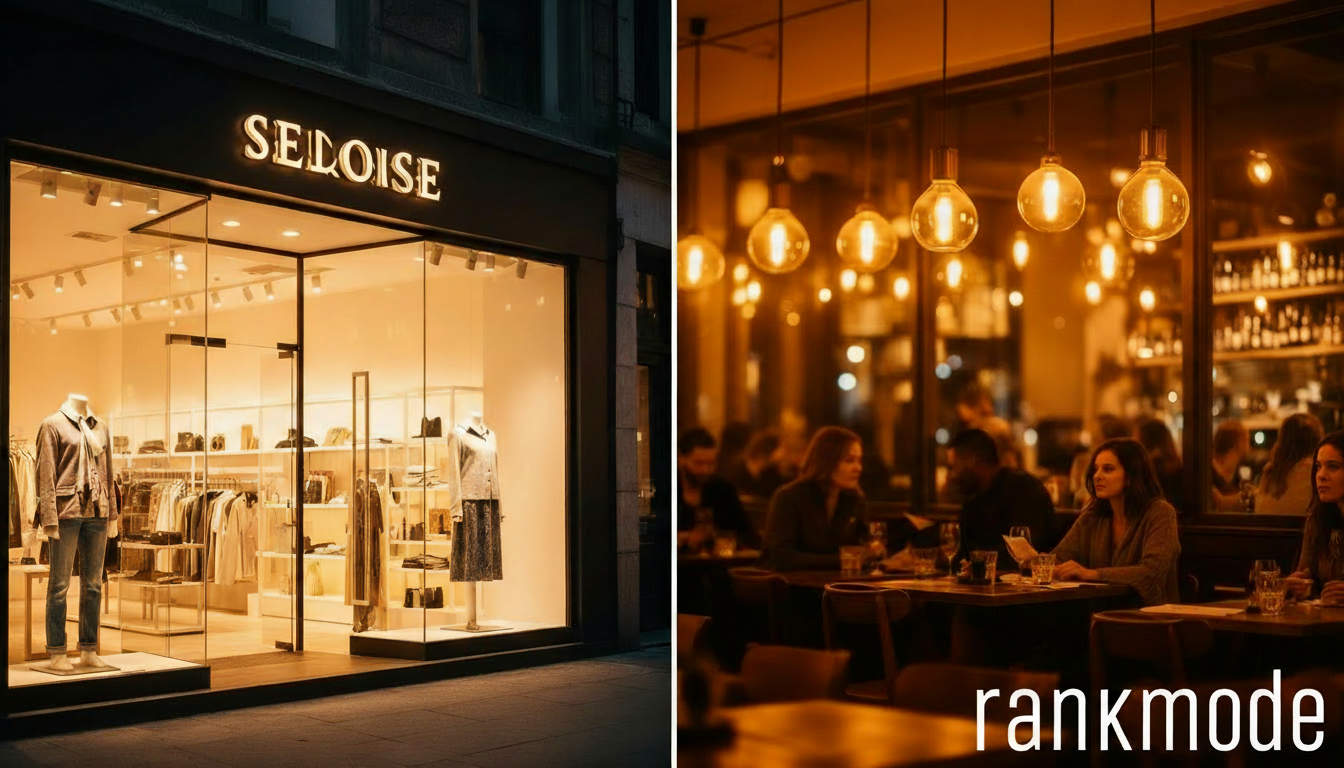
Retail photos should make people want to browse. Show styled displays, organized shelves, and your best products in the context of your store. Exterior shots help customers recognize your storefront when they arrive. Seasonal updates—holiday displays, new collection arrivals—keep your profile fresh. For more on this, read our guide on turning GBP views into foot traffic for retail stores.
Restaurants: Make People Hungry
Restaurant photos need to trigger cravings. Close-up shots of signature dishes, the dining room atmosphere, a busy kitchen, and your team in action all work. Unlike retail, food photography has to convey taste and texture through a screen—good lighting and plating make all the difference.
Both business types should aim for 15–25+ photos minimum and add new ones monthly. Google rewards profiles with recent, high-quality images with more visibility. Learn more in our GBP optimization guide.
Google Posts: Different Content, Same Consistency
Weekly Google Posts keep both business types visible, but the content should match what drives each audience to act.
- Retailers: New arrivals, flash sales, seasonal collections, in-store events, behind-the-scenes unboxings
- Restaurants: Daily specials, new menu items, chef features, upcoming events, holiday hours, reservation reminders
The common thread? Both need to create urgency—a reason to visit now. "New spring collection just landed" and "Tonight only: half-price oysters" both work because they're timely and specific.
Reviews: What Customers Talk About Differs
Reviews matter equally for both, but what makes a helpful review is different.
Retail reviews that mention product quality, helpful staff, store atmosphere, and unique selection are gold. They tell future shoppers what to expect and help Google understand your offerings. For a deep dive, see our article on how retailers can use reviews to stand out.
Restaurant reviews that describe specific dishes, service quality, ambiance, and value for money are most impactful. A review saying "the handmade pasta was incredible and our server recommended the perfect wine pairing" tells future diners exactly why they should choose you.
Both should respond to every review within 48 hours—positive and negative. Responsiveness signals to Google and to customers that you're engaged and care.
The Shared Fundamentals That Drive Rankings
Despite the tactical differences, retailers and restaurants share the same ranking foundation:
- Complete profiles: Every field filled, every attribute selected
- Consistent NAP: Name, address, phone identical across all directories
- Regular activity: Weekly posts, fresh photos, prompt review responses
- Website alignment: Your website content should support and reinforce your GBP
- Review velocity: A steady stream of new reviews, not just a one-time push
Whether you're selling clothes or serving dinner, the businesses that treat their Google Business Profile as an ongoing marketing channel—not a one-time setup—are the ones that dominate local search.
Need help keeping your profile optimized consistently? Check out our plans at Rankmode.pro—we tailor our approach to your business type so you get results that match how your customers actually search.